
Rosa Parks: Civil Rights Icon, Legacy
A Legacy Forged in Defiance: The Life and Impact of Rosa Parks
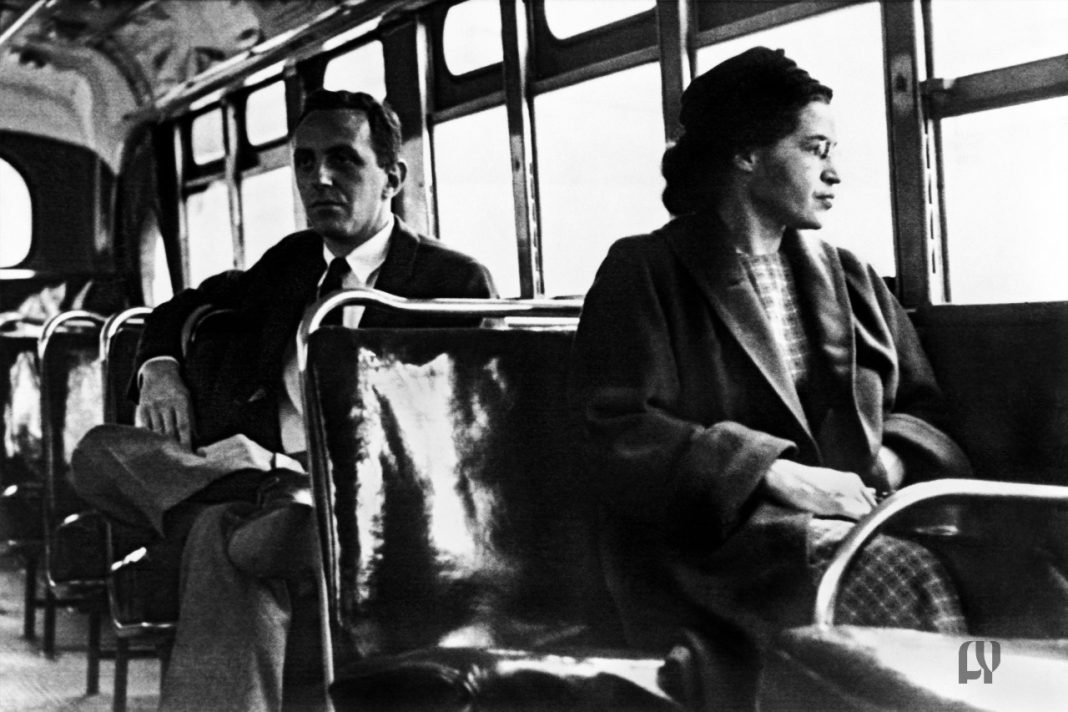
On a cold December evening in 1955, a 42-year-old seamstress named Rosa Parks boarded a segregated bus in Montgomery, Alabama. She was unaware that her refusal to surrender her seat would ignite a revolution. Parks was born on February 4, 1913, in Tuskegee, Alabama.
Her journey began in a childhood marked by racial violence. It led to her becoming “the mother of the freedom movement.” Her life is a testament to resilience and quiet rebellion. Today, as we commemorate her birth, we unravel the layers of her activism. We think about the seismic waves of the Montgomery Bus Boycott. We also honour her enduring legacy in the fight for justice.
- The Spark That Lit the Fire: December 1, 1955
- Beyond Montgomery: The Radical Roots of a Quiet Revolutionary
- Detroit: A New Chapter in the Struggle
- Awards, Honours, and the Weight of Symbolism
- The Unfinished Work: Parks’ Legacy in a Divided America
- Conclusion: The Quiet Power of Defiance
- Frequently Asked Questions: Rosa Parks
The Spark That Lit the Fire: December 1, 1955
Parks’ arrest for defying bus segregation laws was no spontaneous act of exhaustion but a calculated stand against systemic oppression. She later reflected, “I was not tired physically. I was tired of giving in.” These words encapsulate the collective weariness of Black Americans under Jim Crow. Her defiance was rooted in years of activism. As secretary of the Montgomery NAACP, she documented racial violence. She advocated for voter registration. She fought for justice in cases like the 1944 gang rape of Recy Taylor.
I was not tired physically. I was tired of giving in.
The boycott that followed her arrest—orchestrated by a 26-year-old Martin Luther King Jr.—lasted 381 days, crippling Montgomery’s transit system and galvanising a nation. Black residents organised carpools, walked miles to work, and turned churches into hubs of resistance. The Supreme Court’s 1956 ruling to desegregate buses marked a historic victory. Still, for Parks, the backlash came quickly. She faced death threats, job loss, and economic hardship. These challenges forced her to move to Detroit in 1957.
Beyond Montgomery: The Radical Roots of a Quiet Revolutionary
Long before her iconic bus protest, Parks embodied radical resistance. In 1932, she married Raymond Parks, a barber and NAACP activist who mentored her in grassroots organising. Together, they fought for the Scottsboro Boys’ exoneration and supported Black veterans denied GI Bill benefits.
In 1955, Parks attended Tennessee’s Highlander Folk School, a crucible for civil rights leaders. There, she studied nonviolent resistance alongside Septima Clark and Esau Jenkins, refining strategies later deployed in Montgomery. “Highlander was a turning point,” she recalled. “It taught me that equality wasn’t a plea—it was a demand.”.

Detroit: A New Chapter in the Struggle
Exiled from the South, Parks transformed her Michigan home into a sanctuary for activism. She was hired as a receptionist for Congressman John Conyers in 1965. She became a bridge between marginalised communities and legislative power. She advocated for housing equity, police reform, and anti-poverty initiatives. Her work extended beyond Capitol Hill. She cofounded the Rosa and Raymond Parks Institute for Self-Development. This organisation empowers youth through civil rights education.
Yet, Detroit’s racial tensions mirrored Montgomery’s. In 1967, the city erupted in rebellion over police brutality. Parks condemned systemic neglect. She echoed King by saying, “A riot is the language of the unheard.” Her later years were marked by financial struggles. This was a stark contrast to her iconic status. Yet, she remained a vocal critic of apartheid, mass incarceration, and educational inequity.
Awards, Honours, and the Weight of Symbolism
Parks received several accolades, like the Presidential Medal of Freedom (1996) and the Congressional Gold Medal (1999). These honors often overshadowed her discomfort with being mythologised. She also received over 40 honorary degrees. “I am not a symbol,” she insisted. “I am a woman who saw wrong and tried to right it.”
Her 2005 death at age 92 sparked unprecedented tributes. As the first woman and non-government official to lie in honour at the U.S. Capitol, over 50,000 mourners paid respects. Eulogised by Oprah Winfrey as “a warrior for justice,” Parks’ funeral mirrored the scale of a head of state. Yet, her casket, draped in the U.S. flag, bore the simplicity of her lifelong humility.
The Unfinished Work: Parks’ Legacy in a Divided America
Today, as voter suppression laws resurge and racial disparities persist, Parks’ legacy is both a beacon and a challenge. The 2023 renaming of Cleveland’s Rosa Parks Station and ongoing debates over critical race theory underscore her enduring relevance.
Rosa Parks taught us that revolution begins in the everyday.
“Rosa Parks taught us that revolution begins in the everyday,” said activist Brittany Packnett Cunningham. “It’s in the classrooms, the buses, the ballot boxes.” Her story, now enshrined in textbooks, must also animate today’s movements—from Black Lives Matter to disability rights advocacy.
Conclusion: The Quiet Power of Defiance
Rosa Parks’ life defies simplification. She was not merely a “tired seamstress” but a strategist, a mentor, and a relentless advocate. Her refusal to yield a seat was a refusal to accept the dehumanisation of her people. It serves as a lesson in courage that transcends generations.
As Forever Yena honours her 112th birthday, we are reminded: the fight for justice is not a single act. It is a lifetime of resistance. In Parks’ words, “Memories of our lives, our works, and our deeds will continue in others.” Let that memory ignite action, for the bus ride toward equality is far from over.

Frequently Asked Questions: Rosa Parks
Why is Rosa Parks famous?
Rosa Parks is famous for her courageous refusal to give up her seat on a segregated bus. This happened in Montgomery, Alabama, in 1955. This act of defiance sparked the Montgomery Bus Boycott and became a pivotal moment in the Civil Rights Movement.
What was Rosa Parks’ role in the Civil Rights Movement?
Beyond her bus protest, Rosa Parks was a dedicated activist. She served as secretary of the Montgomery NAACP. She documented racial violence. She advocated for voter registration. Rosa worked tirelessly for equality and justice.
What happened to Rosa Parks after the Montgomery Bus Boycott?
After the boycott, Rosa Parks faced backlash, including death threats and job loss. She moved to Detroit, Michigan. There, she continued her activism. She worked for Congressman John Conyers and co-founded the Rosa and Raymond Parks Institute for Self-Development.
What were some of Rosa Parks’ lesser-known contributions?
Rosa Parks’ activism extended beyond the bus incident. She fought for the exoneration of the Scottsboro Boys. She supported Black veterans denied GI Bill benefits. She advocated for housing equity, police reform, and anti-poverty initiatives in Detroit.
How is Rosa Parks remembered today?
Rosa Parks is remembered as an icon of the Civil Rights Movement. She received many awards, including the Presidential Medal of Freedom and the Congressional Gold Medal. Her legacy continues to inspire movements for social justice and equality.