


Unearthing Shadows: The Taung Child’s Century-Long Journey Through Science and Colonialism
In the summer of 1924, a blast of dynamite cracked open a limestone quarry. This event occurred in the dusty hills of South Africa’s North West province. Amid the rubble, a miner’s pickaxe struck an unassuming rock. Embedded within it was a small, fossilised skull. This discovery ignited a scientific revolution. It unravelled entrenched colonial myths. It also left a legacy as fractured as the landscape from which it emerged. This year is the 100th anniversary of the Taung Child. This fossil reshaped humanity’s origin story. It also laid bare the tensions of its colonial birthplace.
A Skull That Shook the World
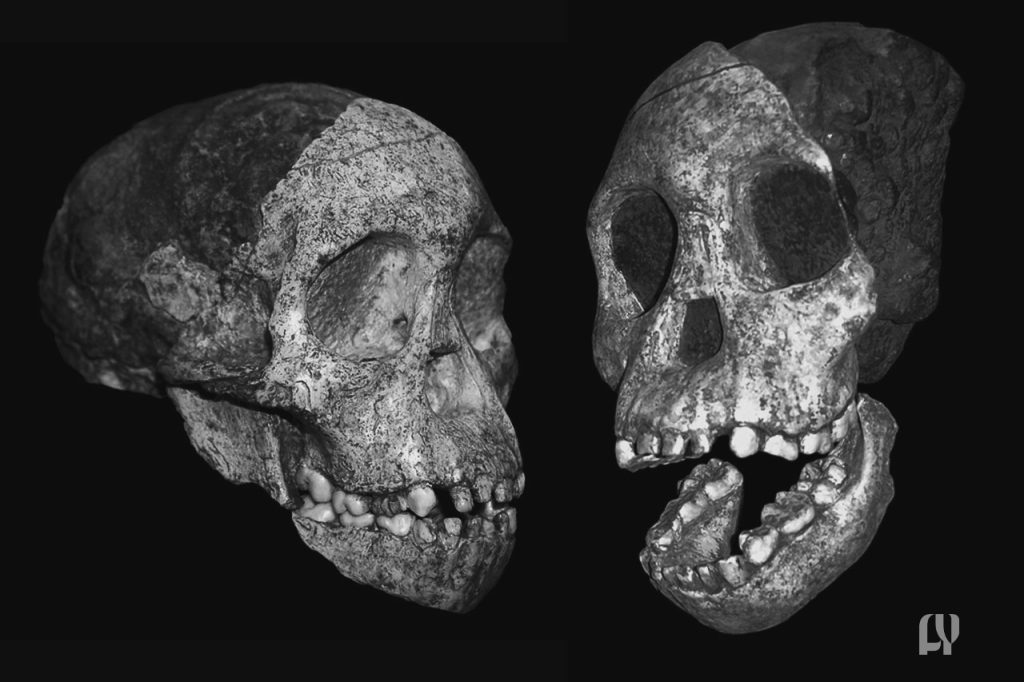
When Australian anatomist Raymond Dart received the fossil in a crate of mining debris, he recognised its significance instantly. The skull belonged to a three-year-old hominin. It showed a blend of ape-like and human features. This challenged the prevailing belief that humans originated in Europe or Asia. Dart declared it Australopithecus africanus—a “southern ape of Africa”—and argued it was a missing link in human evolution.
Every bone has a story beyond science. And sometimes, the deepest truths lie not in the rock but in the hands that broke it open.
But the scientific establishment baulked. Prominent British palaeontologists dismissed Dart’s claims, clinging to the “Piltdown Man” hoax, a fake fossil “proving” European superiority. “They called him a reckless upstart,” says Dr. Lindiwe Khumalo, a historian at Wits University. “Dart’s work threatened not just theories but hierarchies.” It took decades for the Taung Child to be accepted as proof of Africa’s central role in human origins. Vindication arrived only after similar fossils emerged across the continent.
Colonial Bones: The Hidden Labour Behind the Discovery
The Taung Child’s story, nevertheless, is not one of lone geniuses. The fossil emerged from the bloodied hands of South Africa’s mining industry, a pillar of colonial exploitation. The Buxton Limeworks quarry was the site where the skull was found. It relied on Black migrant labourers. They were paid pennies to blast and haul limestone. Their names—unrecorded in history—were erased from the narrative, even as their labour unearthed a global icon.
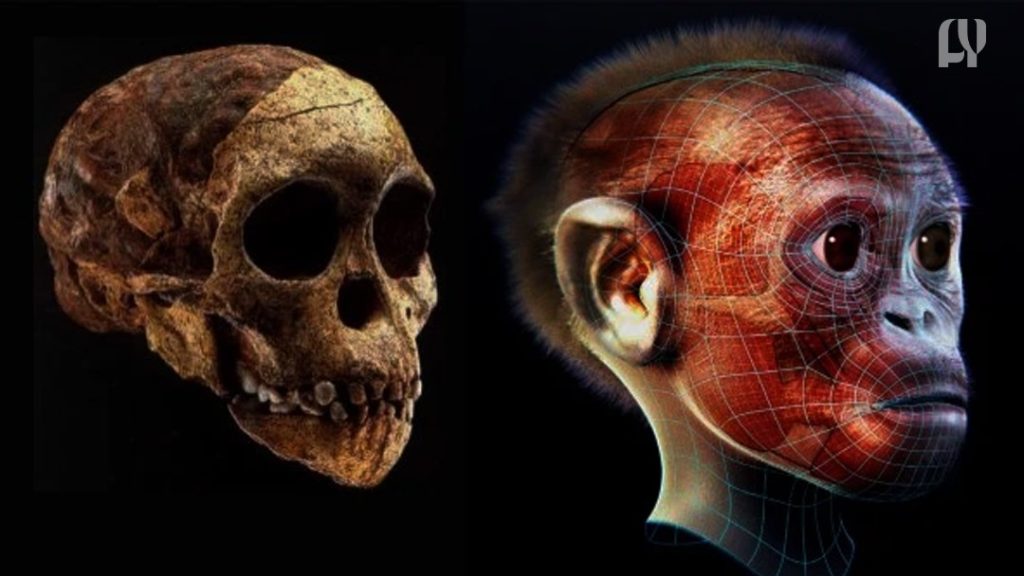
“This fossil is a colonial artefact,” asserts Dr. Sipho Dlamini, a postcolonial scholar at the University of Cape Town. “Black workers extracted it under brutal conditions. A white Australian academic studied it. It was used to justify colonial ‘civilising’ missions. The irony is that it at the same time disproved racist evolutionary myths.”
Dart himself embodied these contradictions. He championed Africa as humanity’s cradle. Yet, his writings occasionally echoed colonial paternalism. He framed Indigenous Africans as “primitive” in contrast to “advanced” Europeans. Such language, scholars argue, reinforced the very systems his discovery undermined.
Reclaiming the Child: Voices from Taung Child
For decades, the Taung Child’s legacy was curated far from its homeland. The fossil resides at Wits University in Johannesburg, 500 kilometres from Taung, where local communities have long demanded its return. “This child is ours,” says Thandeka Mokoena, a Taung elder and activist. “Its spirit belongs here, with the people who lived and died on this soil.”
Recent years have seen tentative steps toward restitution. In 2024, Wits launched a digital replica of the fossil, allowing global access while keeping the original in South Africa. But for many, this isn’t enough. “A digital copy is a shadow,” Mokoena argues. “We want our ancestor home.”
This fossil is a colonial artefact…the irony is that it at the same time disproved racist evolutionary myths.
The debate mirrors broader calls for repatriating African artefacts held in Western museums. The Taung Child’s case is exceptionally complex. Should it be considered a national treasure? Is it a global scientific resource? Alternatively, is it an ancestral being deserving of burial? “These questions force us to confront what reconciliation means,” says Khumalo. “Science can’t exist in a moral vacuum.”
Eagles, Dating, and New Science
While its legacy stirs controversy, the Taung Child continues to fuel scientific breakthroughs. Recent studies using uranium-lead dating confirmed the fossil’s age at 2.8 million years, placing it at a critical juncture in hominin evolution. Meanwhile, a provocative theory suggests the child’s death was not due to predators like leopards. As once thought, it resulted from an ancient eagle attack. This hypothesis is supported by puncture marks in the eye sockets.
“The eagle theory reshapes how we envision early human environments,” explains Dr. Amara Nkosi, a paleoanthropologist at the University of Pretoria. “It wasn’t just big cats our ancestors feared. Danger came from the skies too.” Such insights, along with CT scans that reveal brain structure details, show how technology keeps the Taung Child relevant. This relevance continues a century later.
A Century Later: Healing the Fractures
As South Africa marks the Taung Child’s centenary, commemorations have taken on a reflective tone. Exhibitions at the Maropeng Cradle of Humankind now pair fossil displays with panels on mining labour history. Academic conferences feature not just palaeontologists, but poets and Indigenous storytellers. In Taung, a new heritage centre—funded by the government and local NGOs—aims to blend science with oral traditions.
“This isn’t just about looking back,” says Dlamini. “It’s about asking how we steward humanity’s heritage in a decolonial age. Who gets to speak for the Taung Child? Whose knowledge counts?”
For Dart’s descendants, the reckoning is personal. His granddaughter, Clara Dart-McLeod, recently joined a delegation to Taung, apologising for the erasure of miners’ contributions. “We can’t change the past,” she said, “but we can honour all those who made this story possible.”
The Child’s Enduring Lesson
A hundred years on, the Taung Child remains a potent symbol of Africa’s dual identity. It is a continent celebrated as humanity’s mother. It is also scarred by extraction and erasure. Its tiny skull reflects our origins. It reveals our failings. This proves that fossils are not just relics of ancient life. They are artefacts of the power dynamics that shape their discovery.
The sun sets over the Taung quarries. The quarries are now silent, but for the wind. The land whispers a reminder: Every bone has a story beyond science. And sometimes, the deepest truths lie not in the rock but in the hands that broke it open.
FAQ’s: Taung Child – Fossil, Africa Origins
What is the Taung Child, and why is it important?
The Taung Child is a 2.8-million-year-old fossil skull of an Australopithecus africanus discovered in South Africa. It’s significant because it provided early evidence that humans originated in Africa, challenging earlier theories that favoured Europe or Asia.
Where was the Taung Child discovered, and what was the context of its discovery?
The Taung Child was found in a limestone quarry in Taung, South Africa. Miners discovered it while working under exploitative conditions during the colonial era. This highlights the intersection of science and colonial labour practices.
Why was the Taung Child’s discovery initially controversial?
The Taung Child’s discovery was initially met with scepticism from the scientific establishment. British scientists were particularly skeptical. They favoured theories of European origins. The fossil challenged existing beliefs and power structures within the scientific community.
What is the current debate surrounding the Taung Child’s legacy?
The current debate centres on the repatriation of the Taung Child fossil to Taung, South Africa. There is also the recognition of the contributions of Black miners who discovered it. It also involves addressing the colonial context of its study and interpretation.


