


Bayard Rustin: The Angelic Troublemaker Whose Legacy Echoes Through Time
In the annals of history, some names shimmer brightly. Others flicker in the shadows. This is not for lack of brilliance. It’s because the world was not yet ready to face their light. Bayard Rustin was the mastermind behind the 1963 March on Washington. He was also a stalwart of the civil rights movement. He is one such figure. A man of contradictions—Black, gay, Quaker, socialist—Rustin’s life was a tapestry of courage and compromise, visibility and erasure. As Netflix’s recent biopic Rustin reignites global interest in his story, we delve into his legacy. He was a man who dared to dream of justice. He did this in a world that often refused to see him.
- Early Life: The Making of a Radical
- The Gandhi of America: Pacifism and Prison
- The Price of Visibility: Sexuality and Scandal
- The March on Washington: A Triumph and a Mask
- From Civil Rights to Human Rights: The Later Years
- Love in the Shadows: Walter Naegle and a Quiet Revolution
- Death and Resurrection: Why Rustin Was Forgotten
- The Troublemaker’s Torch: Lessons for South Africa
- Conclusion: The Arc of the Moral Universe
- FAQs About Bayard Rustin
Early Life: The Making of a Radical
Bayard Rustin was born on 17 March 1912 in West Chester, Pennsylvania. The world was rigidly divided by race and class. Raised by his grandparents, Julia and Janifer Rustin, he grew up believing Julia was his mother. He thought his biological mother, Florence, was his older sister. This familial secrecy later shaped his understanding of societal masks.
A gifted student and athlete, Rustin’s Quaker upbringing instilled in him the values of nonviolence and equality. His grandmother’s activism ignited his fire. She was a founding member of the National Association for the Advancement of Coloured People (NAACP) in their town. By his teens, Rustin was already staging protests, refusing to sit in segregated balconies at local cinemas.
Freedom is never given; it is won through collective courage.
In the 1930s, Rustin joined the Young Communist League, drawn by their stance against racial injustice. But he left abruptly when the party shifted focus away from civil rights during World War II. This pivot marked Rustin’s lifelong commitment to principle over party—a trait that would later alienate allies and define his legacy.
The Gandhi of America: Pacifism and Prison
Rustin’s true awakening came through the teachings of Mahatma Gandhi. In 1948, he travelled to India to study nonviolent resistance. He returned with a mission to weave Gandhian principles into the fabric of America’s civil rights struggle. His mentorship of a young Martin Luther King Jr. in the 1950s transformed King into the icon of nonviolence we revere today. “We need, in every community, a group of angelic troublemakers,” Rustin often said—a mantra he embodied.
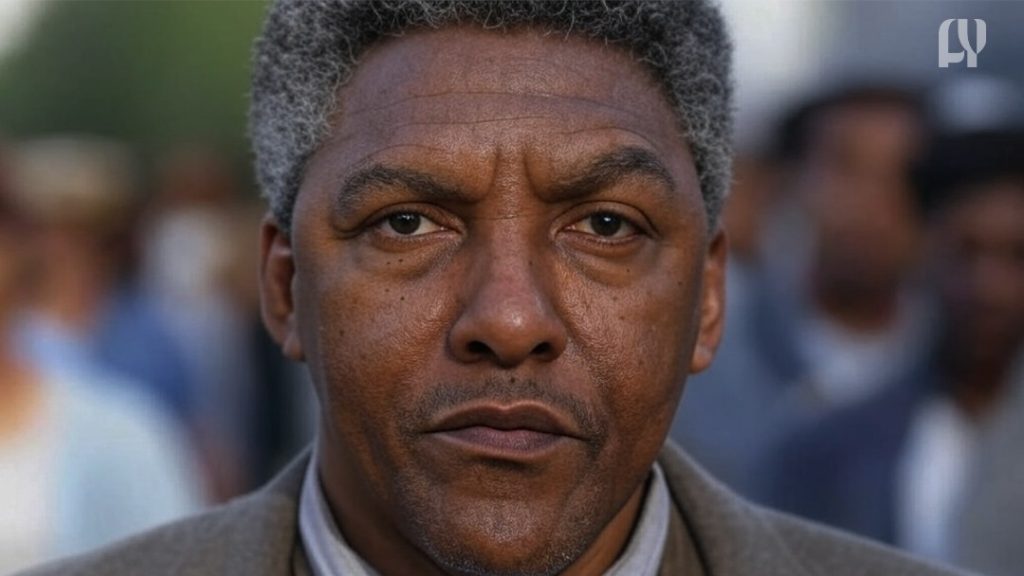
But his activism came at a cost. A conscientious objector during World War II, Rustin spent over two years in prison for refusing the draft. Behind bars, he organised protests against segregated seating in dining halls, proving that resistance knows no bounds.
The Price of Visibility: Sexuality and Scandal
Rustin’s brilliance was matched only by the peril of his identity. Openly gay in an era when homosexuality was criminalised, he faced relentless persecution. In 1953, he was arrested in Pasadena, California, on a “morals charge” for consensual intimacy with another man. This conviction haunted him for decades.
This arrest nearly derailed his career. In 1960, Congressman Adam Clayton Powell Jr., threatened by Rustin’s growing influence, warned King to distance himself. Otherwise, he would face rumours of a fake “affair” between the two men. King reluctantly cut ties with Rustin, a decision that haunted both men. Yet, by 1963, King knew the March on Washington needed Rustin’s strategic genius. Swallowing fears of backlash, he summoned Rustin back—but only if he worked “in the shadows.”
The March on Washington: A Triumph and a Mask
On 28 August 1963, over 250,000 people gathered at the Lincoln Memorial—a sea of hope demanding jobs and freedom. The march’s success, crowned by King’s “I Have a Dream” speech, was Rustin’s masterpiece. From coordinating buses to negotiating with police, his meticulous planning ensured the protest remained peaceful and potent.
Yet, Rustin’s name was conspicuously absent from mainstream accolades. Organisers, fearing his sexuality would be weaponised by opponents, relegated him to the background. Photographs cropped him out; speeches omitted his contributions. “They loved his work but not his being,” remarked his partner, Walter Naegle.
From Civil Rights to Human Rights: The Later Years
Undeterred, Rustin expanded his fight. He championed economic justice, arguing that true equality required dismantling poverty. In 1965, he co-founded the A. Philip Randolph Institute, linking labour rights to civil rights. He supported unions, immigrant rights, and even controversial policies like affirmative action.
Internationally, Rustin condemned apartheid in South Africa, standing in solidarity with the African National Congress (ANC). In a 1984 speech, he compared Nelson Mandela’s imprisonment to his own struggles. He stated, “Freedom is never given; it is won through collective courage.”
But his stance on LGBTQ+ rights remained fraught. While Rustin lived openly with Naegle—his partner of 10 years—he rarely addressed gay rights publicly until the 1980s AIDS crisis. “The barometer for social progress is how we treat our most marginalised,” he declared in 1986. He urged activists to embrace intersectionality long before the term existed.
Love in the Shadows: Walter Naegle and a Quiet Revolution
In 1977, Rustin met Walter Naegle, a 26-year-old teacher, in New York. Their bond was immediate. To protect Rustin from legal persecution, Naegle legally became his adopted son—a heartbreaking workaround for love in a homophobic era. The couple exchanged rings in a private Quaker ceremony, forging a partnership that lasted until Rustin’s death.
Naegle, now the keeper of Rustin’s legacy, reflects, “Bayard knew his truth made him vulnerable, but he refused to shrink. His love was as revolutionary as his protest.”
Death and Resurrection: Why Bayard Rustin Was Forgotten
Rustin died on 24 August 1987, aged 75, from a perforated appendix. Obituaries glossed over his sexuality, reducing him to a “civil rights organiser.” For years, his story languished in footnotes, erased by homophobia and political convenience.
Yet, history bends toward justice. In 2013, President Barack Obama posthumously awarded Rustin the Presidential Medal of Freedom, citing his “unshakeable optimism.” In 2020, California pardoned his 1953 conviction, a symbolic reckoning with past injustices.
We need, in every community, a group of angelic troublemakers.
Today, Rustin’s legacy thrives in the intersections he once navigated alone. The Netflix film Rustin, starring Colman Domingo, reintroduces him to a generation embracing LGBTQ+ and racial justice. Activists from Johannesburg to Johannesburg cite him as proof that “no struggle is single-issue.”
The Troublemaker’s Torch: Lessons for South Africa
Rustin’s life resonates deeply in South Africa, where the fight against apartheid mirrored his own battles. His belief in coalition-building inspired our Truth and Reconciliation Commission, while his unapologetic queerness challenges ongoing stigma. Nomsa Dlamini is a Soweto-based LGBTQ+ activist. She notes, “Rustin teaches us that our identities are not burdens. They are weapons of change.”
Conclusion: The Arc of the Moral Universe
Bayard Rustin once wrote, “We are all one—and if we don’t know it, we will learn it the hard way.” His life was a testament to unity in disunity, courage in concealment, and love in the face of hate. As the world finally catches up to his vision, Rustin’s legacy reminds us. Progress is not a march but a mosaic. It is built by those brave enough to be both angelic and troublesome.
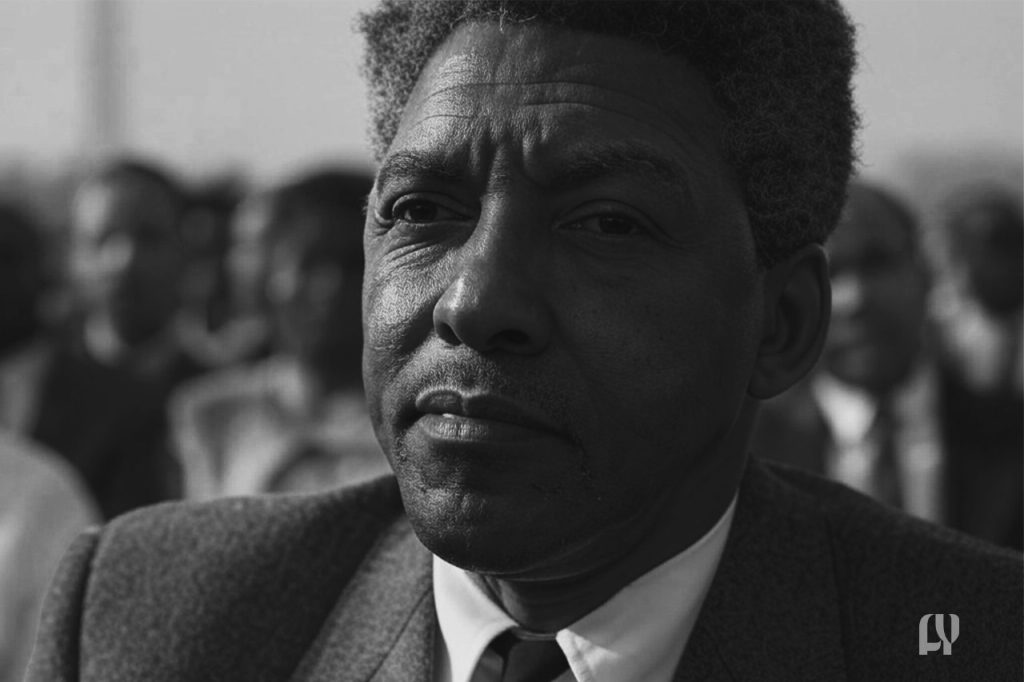
FAQs About Bayard Rustin
What is Bayard Rustin most known for?
Bayard Rustin is best known for organising the historic 1963 March on Washington, where Martin Luther King Jr. delivered his iconic “I Have a Dream” speech.
Who was Bayard Rustin in love with?
Bayard Rustin was in a lifelong partnership with Walter Naegle. He met Walter in 1977. Walter became his legal son to circumvent anti-gay laws.
Why is Bayard Rustin not well known?
Bayard Rustin was often sidelined in history due to his homosexuality. The stigma it carried during his lifetime further affected this. Despite this, his contributions to civil rights were monumental.
Why did MLK fire Rustin?
Martin Luther King Jr. temporarily distanced himself from Rustin in 1960. This was due to political pressure. There were also fears that Rustin’s sexuality would be used to discredit the civil rights movement.
How did Bayard Rustin die?
Bayard Rustin died on 24 August 1987 from a perforated appendix. He left behind a legacy of activism that continues to inspire generations.
In the spirit of Bayard Rustin, Forever Yena urges readers to share stories of forgotten changemakers. Who will you uncover?


